
SMSF Trustee Education Course
Secure your spot for $11 (once-off). After payment, we’ll email your login and unlock all lessons and the certificate.
You’re viewing a locked lesson preview. Purchase unlocks all 8 lessons, quizzes and the certificate.
Welcome to the My SMSF Trustee/Member Education Course!
This course will introduce you to Self-Managed Super Funds (SMSFs), helping you understand the benefits and risks of operating an SMSF. By the end of this course, you’ll be equipped with the knowledge to decide if an SMSF is the right choice for your financial future.
Introduction to SMSFs
An SMSF (Self-Managed Super Fund) is a private superannuation fund that you manage yourself. As an SMSF trustee and member, you have control over how your retirement savings are invested.
Quick Check: What does SMSF stand for?
- a) Super Money Savings Fund b) Self-Managed Savings Fund c) Self-Managed Super Fund (Correct) d) Special Managed Super Fund
SMSF Structure and Membership
- Membership: SMSFs can have one to six members.
- Trustees: All members must also be trustees (or directors if using a corporate trustee structure).
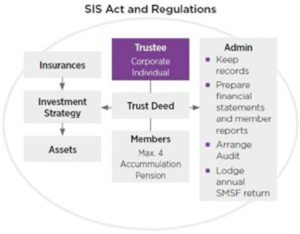
Two Main Structures:
|
Structure |
Details |
|
Individual Trustee |
Requires at least two members/trustees |
|
Corporate Trustee |
Can have one to six members/directors |
Trustee Requirements
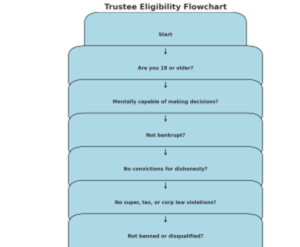
To be a trustee of an SMSF, you must:
- Be Legally Eligible:
- 18 years or older
- Mentally capable of making decisions
- Not bankrupt
- Have a Clean Record:
- No convictions for dishonesty
- No violations of super, tax, or corporations laws
- Not banned or disqualified by a court or regulator
- For Corporate Trustees:
- Company must be solvent
- Directors must have a clean ASIC record
Quick Check: Can a person under 18 be an SMSF trustee?
- a) Yes b) No (Correct) c) Only with parental consent d) Only if they’re the sole member
Types of Super Funds in Australia
|
Fund Type |
Description |
|
Industry Super Funds |
Not-for-profit funds linked to specific industries, managed for the benefit of their members. |
|
Retail Super Funds |
Managed by financial institutions, open to everyone with a variety of investment options. |
|
Public Sector Funds |
Exclusively for government employees. |
|
Small APRA Funds (SAFs) |
Similar to SMSFs but with a professional trustee regulated by APRA. |
Additional Resources
- Australian Taxation Office (ATO) SMSF information: ATO SMSF Guide
ASIC’s MoneySmart SMSF Guide: MoneySmart SMSF Guide
Finish Course Early?
You have not completed all required lessons and assessments.