
SMSF Trustee Education Course
Secure your spot for $11 (once-off). After payment, we’ll email your login and unlock all lessons and the certificate.
You’re viewing a locked lesson preview. Purchase unlocks all 8 lessons, quizzes and the certificate.
Understanding SMSF Trustee Structures
Introduction: Choosing Your SMSF Trustee Structure
As an SMSF trustee, one of the most important decisions you’ll make is choosing between an individual trustee structure or a corporate trustee structure. This choice impacts how your fund operates, its legal obligations and potential risks.
Types of SMSF Trustee Structures
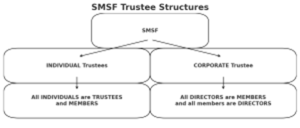
- Individual Trustees
Definition: Each member of the SMSF acts as a trustee. Key Features:
- Minimum of two members required.
- Simpler and less expensive to set up.
- Greater personal liability.
- Corporate Trustee
Definition: A company acts as the trustee of the SMSF. Key Features:
- Can have one to six members.
- Offers limited liability.
- More complex and expensive to set up.
Quick Check: What’s the minimum number of members required for an individual trustee structure?
- a) One b) Two (Correct) c) Three d) Four
Key Roles and Responsibilities of SMSF Trustees
Regardless of the structure chosen, all SMSF trustees must:
- Be a member of the SMSF (with few exceptions).
- Understand and comply with super laws, trust deed and tax laws.
- Meet all administrative requirements.
- Consent in writing to their appointment.
- Not receive remuneration for their role as trustee.
Comparison: Individual vs. Corporate Trustee
|
Feature |
Individual Trustee |
Corporate Trustee |
|
Setup Complexity |
Simpler and less expensive |
More complex and expensive |
|
Number of Members Required |
Minimum of two |
Can have one to six |
|
Liability |
Greater personal liability |
Limited liability |
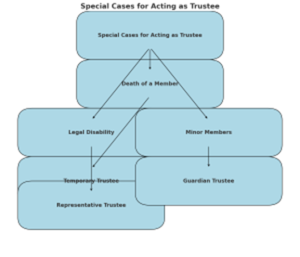
Special Cases for Acting as Trustee
- Death of a Member: The deceased’s legal personal representative can act as trustee temporarily.
- Legal Disability: A representative must act for members with legal disability.
- Minor Members: A guardian must act for members under 18.
Important Considerations and Warnings
Warning: Acting as a trustee while disqualified can lead to severe penalties, including imprisonment. Always ensure compliance with your SMSF’s trust deed and legal requirements. State Law Consideration: Some states limit trusts to four individual trustees. SMSFs with more than four members may need to use a corporate trustee structure.
Summary and Key Takeaways
- Choose between individual trustees (simpler, higher liability) and corporate trustee (more complex, limited liability).
- Understand and fulfill all trustee responsibilities.
- Consider special cases that may affect trusteeship.
- Be aware of state laws that may impact your trustee structure choice.
- Regularly review your structure to ensure it still meets your SMSF’s needs.
Final Quick Check: True or False – A corporate trustee structure typically offers more protection for personal assets compared to an individual trustee structure. a) True (Correct) b) False
Additional Resources
- ATO – Self-managed super funds: ATO SMSF Guide
- ASIC – Self-managed superannuation funds: ASIC SMSF Information
Finish Course Early?
You have not completed all required lessons and assessments.