
Table of Contents (Add anchor links on your WordPress site) Introduction: Subdivision in an SMSF – Why It’s Different Key Rules to Understand Before You Begin Is Subdivision Allowed in My SMSF? Common Types of SMSF Subdivision Projects Funding Subdivision Projects – Key Restrictions Can You Borrow for Subdivision Works? Tax and Compliance Considerations Capital […]
Table of Contents (Add anchor links on your WordPress site)
-
Introduction: Subdivision in an SMSF – Why It’s Different
-
Key Rules to Understand Before You Begin
-
Is Subdivision Allowed in My SMSF?
-
Common Types of SMSF Subdivision Projects
-
Funding Subdivision Projects – Key Restrictions
-
Can You Borrow for Subdivision Works?
-
Tax and Compliance Considerations
-
Capital Gains Tax and Subdivision in SMSFs
-
Subdivision in Pension Phase – What Changes?
-
Real-Life Scenarios and Examples
-
Tips to Stay Compliant with SMSF Rules
-
Conclusion: Is Subdivision Worth It in Your SMSF?
Navigating Tax Implications for SMSF Property Subdivision Projects
Introduction
Are you considering subdividing property within your Self-Managed Super Fund (SMSF)? While it can be a lucrative venture, it’s crucial to understand the tax implications and compliance requirements before proceeding. In this comprehensive guide, we’ll walk you through the key considerations, potential pitfalls and actionable steps to maximize returns while ensuring compliance with SMSF regulations.
Understanding the Regulatory Framework
SMSFs are subject to specific rules and regulations set by the Australian Taxation Office (ATO) and the Superannuation Industry (Supervision) Act 1993 (SIS Act). Before embarking on a property subdivision project within your SMSF, familiarize yourself with the compliance obligations and seek professional advice to ensure your plans align with the regulatory framework.
Key Regulations and Compliance Requirements
| Regulation | Description | Compliance Action |
|---|---|---|
| SIS Act | Governs the operations of SMSFs | Ensure your subdivision project aligns with the SIS Act provisions |
| ATO Guidelines | Provides guidance on SMSF activities | Consult ATO guidelines for specific tax treatment and compliance requirements |
| Investment Strategy | SMSFs must have an investment strategy that includes considerations of risk, return, diversification and liquidity | Regularly review and update your SMSF’s investment strategy to include property subdivision projects |
Tax Treatment: Capital Gains vs. Income
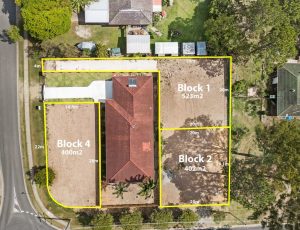
The tax treatment of your subdivision project depends on the nature and intent of the development. If the property is held as a long-term investment and subdivided for sale, any profits may be treated as capital gains, which can be subject to concessional tax rates within the SMSF. However, if the subdivision is considered a business activity or trading stock, the profits may be treated as income and taxed at the applicable marginal rates.
Comparative Tax Treatment
| Criteria | Capital Gains Tax (CGT) | Income Tax |
|---|---|---|
| Nature of Activity | Investment | Business/Trading |
| Tax Rate | Concessional (up to 15%) | Marginal rates (up to 45%) |
| Eligible for Discounts | Yes, if held for more than 12 months | No |
| Reporting Requirement | Report as CGT event | Report as ordinary income |
Mitigating Risks and Conducting Due Diligence
Property subdivision projects come with inherent risks, including zoning restrictions, council approvals and potential tax liabilities. To mitigate these risks, conduct thorough due diligence before proceeding. Research local council regulations, obtain necessary permits and engage with professionals experienced in SMSF property development to ensure compliance and feasibility.
Risk Mitigation Checklist
| Risk | Mitigation Strategy |
|---|---|
| Zoning Restrictions | Research zoning laws and ensure compliance |
| Council Approvals | Obtain all necessary permits and approvals |
| Tax Liabilities | Consult with a tax professional to understand liabilities |
| Compliance Issues | Regularly review compliance requirements with a specialist |
GST Implications for SMSF Property Subdivision
GST can have significant implications for SMSF property subdivision projects. If your SMSF is registered for GST, you may be required to charge GST on the sale of subdivided lots and claim input tax credits for eligible expenses. However, if the subdivision is considered a residential property sale, it may be exempt from GST. Seek advice from a tax professional to understand the specific GST implications for your project.
GST Considerations
| Aspect | Requirement |
|---|---|
| GST Registration | Required if turnover exceeds $75,000 |
| Charging GST | Required on commercial sales, potentially exempt for residential |
| Input Tax Credits | Claimable on eligible expenses related to the subdivision |
| Residential Sale Exemption | Applies to sales of newly constructed residential properties |
Maintaining SMSF Compliance
Throughout the property subdivision process, it’s crucial to maintain compliance with SMSF rules and regulations. This includes ensuring the project meets the sole purpose test, avoiding related-party transactions and adhering to in-house asset rules. Regularly review your SMSF’s investment strategy and seek professional advice to ensure ongoing compliance.
Compliance Checklist
| Compliance Area | Action Required |
|---|---|
| Sole Purpose Test | Ensure the project primarily benefits members’ retirement |
| Related-Party Rules | Avoid transactions with related parties |
| In-House Asset Rules | Limit in-house assets to 5% of the total fund value |
| Investment Strategy | Regularly review and document the strategy including subdivision projects |
ATO’s requirements for SMSF property Development:
According to the Australian Taxation Office (ATO), SMSF trustees must ensure that property development within the fund is not considered a business activity, as this could compromise the SMSF’s compliance status. It is crucial to maintain meticulous records to substantiate the nature of the subdivision, as this can significantly influence the tax treatment of the profits. Additionally, the ATO emphasizes the importance of understanding the GST implications; if the SMSF is registered for GST, it may need to charge GST on the sale of subdivided lots and can claim input tax credits for eligible expenses. Subdivisions involving new residential premises may also attract GST. Trustees must align property development projects with the SMSF’s investment strategy and avoid prohibited related-party transactions to ensure regulatory compliance and safeguard the fund’s concessional tax status.
Case Studies and Examples
Learning from real-world examples can provide valuable insights into the challenges and opportunities of SMSF property subdivision projects. Explore case studies where SMSF members have successfully navigated the tax implications and compliance requirements. Analyze their strategies, learn from their experiences and adapt their approaches to your own circumstances.
Case Study: SMSF Property Subdivision Success
Background
In 2018, the Smith Family Super Fund, comprising John and Mary Smith, identified an opportunity to invest in a residential property for subdivision and resale. They purchased a 1,200 square meter property in a growing suburb of Melbourne for $800,000.
Challenge
Undertaking a property subdivision within an SMSF required careful planning, adherence to the Superannuation Industry (Supervision) Act 1993 (SIS Act) and compliance with tax laws. The Smiths needed to understand the GST implications and update their SMSF investment strategy to include the subdivision project.
Approach
- Due Diligence: Conducted thorough research on the property and feasibility of the subdivision.
- Professional Engagement: Engaged a financial advisor, tax accountant and legal counsel.
- Permits and Approvals: Obtained necessary permits from the local council.
- Tax Compliance: Worked with a tax advisor to ensure compliance with ATO requirements.
- Investment Strategy Update: Revised SMSF strategy to outline project details.
Land Cost Analysis
According to the Aussie Home Loans report, the median price per square meter for land in Melbourne in 2018 was $705. Calculating for 1,200 square meters:
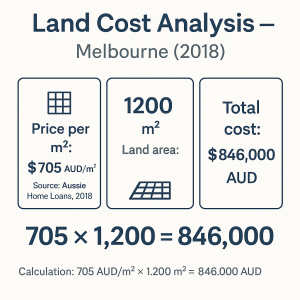
The property was purchased for $800,000, slightly below the median price of $846,000 for that year. This indicates that the purchase price was reasonable and slightly below the average for the area.
Results
The Smiths completed the subdivision in 18 months, resulting in two new titles. They sold both properties within the SMSF for a total of $1.6 million. The net profit, after costs and taxes, was approximately $600,000, benefiting from a concessional tax rate of 15% on capital gains.
Lessons Learned
- Feasibility Studies: Conduct thorough research before investing.
- Professional Expertise: Engage advisors knowledgeable in SMSF property investments.
- Permits and Compliance: Obtain necessary approvals.
- Tax Understanding: Be aware of GST and tax implications.
- Strategic Updates: Align SMSF strategy with the project.
- Project Monitoring: Monitor closely and adapt to changes.
Visual Summary and Analysis
Project Timeline and Milestones
Figure 1: Gantt Chart – Project Timeline
| Milestone | Start Date | End Date | Duration (Months) |
|---|---|---|---|
| Property Acquisition | Jan 2018 | Jan 2018 | 0 |
| Permit Application | Feb 2018 | Apr 2018 | 2 |
| Permit Approval | Apr 2018 | Jun 2018 | 2 |
| Construction Start | Jul 2018 | Dec 2018 | 5 |
| Construction Completion | Dec 2018 | Jun 2019 | 6 |
| Sale of Properties | Jul 2019 | Aug 2019 | 1 |
Financial Performance
Figure 2: Bar Chart – Investment, Costs and Profits
| Category | Amount ($) |
|---|---|
| Initial Investment | 800,000 |
| Subdivision Costs | 200,000 |
| Construction Costs | 400,000 |
| Net Profit | 600,000 |
Cost Breakdown
Figure 3: Pie Chart – Cost Breakdown
| Cost Category | Percentage (%) |
|---|---|
| Land Purchase | 50 |
| Subdivision Permits | 5 |
| Construction Costs | 25 |
| Legal and Professional Fees | 10 |
| Miscellaneous Expenses | 10 |
Profit Distribution
Figure 4: Pie Chart – Profit Allocation
| Allocation Category | Percentage (%) |
|---|---|
| Reinvested in SMSF | 50 |
| Reserved for Future Investments | 50 |
Tax Implications
Figure 5: Flowchart – Tax Implications
- Property Held > 12 Months
- Concessional Tax Rate of 15%
- GST Compliance
- Calculation of Capital Gains
Return on Investment (ROI)
Figure 6: Line Chart – ROI Over 18 Months
| Month | ROI (%) |
|---|---|
| 0 | 0 |
| 6 | 5 |
| 12 | 20 |
| 18 | 50 |
Conclusion
The Smith Family Super Fund’s project demonstrates that careful planning, professional advice and compliance with SMSF regulations can lead to significant financial gains. The purchase price was reasonable compared to the median land price in 2018, further validating the soundness of their investment decision.
For SMSF trustees and members, this case study serves as a valuable example of the potential rewards and complexities involved in property subdivision projects.
Next Steps for SMSF Property Investments
- Evaluate Feasibility: Conduct detailed research and feasibility studies before investing.
- Seek Professional Advice: Engage advisors with expertise in SMSF property investments.
- Update Investment Strategy: Ensure your SMSF strategy aligns with your investment plans.
- Monitor and Adapt: Stay vigilant and flexible throughout the project.
Contact Us
For personalized advice and more case studies, visit My SMSF or contact us directly.
Conclusion: Unlocking Profit with Prudence
Subdividing property within your SMSF can be a powerful way to unlock value and build wealth for your retirement. However, success requires a thorough understanding of the tax implications, compliance obligations and potential risks involved. By conducting due diligence, seeking expert legal, tax and financial advice and maintaining compliance throughout the process, you can maximize returns while ensuring the long-term viability of your SMSF.
Remember, your SMSF is a vehicle for securing your financial future. By approaching property subdivision projects with prudence, diligence and a commitment to compliance, you can unlock the potential for profitable returns while safeguarding your retirement savings.
ADDITIONAL INFORMATION:
Contact My SMSF – Contact Us | SMSF Setup, SMSF Accounting and SMSF Loans (mysmsfproperty.com.au)
ATO SMSF Property – Property Developing in an SMSF
ATO TA:2023/2
Frequently Asked Questions (FAQs)
Q1. Can my SMSF fund a subdivision project if I use a limited recourse borrowing arrangement (LRBA)?
A: Generally, no. If your SMSF has borrowed using an LRBA, you cannot use the borrowed funds for subdivision or significant improvements. Subdivision involves altering the original asset, which is prohibited under LRBA rules.
Q2. Will my SMSF pay capital gains tax (CGT) on profits from a subdivision project?
A: Yes, any capital gains made from selling subdivided lots will be subject to CGT unless your SMSF is in full pension phase. In pension phase, capital gains may be tax-free, but proper structuring and documentation are essential.
Q3. What happens if I unintentionally breach SMSF rules during subdivision?
A: Breaching super laws—such as using SMSF funds for non-compliant purposes or acquiring additional assets improperly—can result in penalties, loss of fund compliance status, or trustee disqualification. Always get legal and tax advice before starting.
Disclaimer
The information contained in this article is general in nature and is provided for educational purposes only. It does not take into account your personal financial situation, objectives, or needs. Before acting on any information in this article, you should consider the appropriateness of the advice with regard to your own objectives, financial situation and needs. You should also seek independent professional advice, including legal, tax and financial advice, before undertaking any SMSF property subdivision or investment strategy. My SMSF and its representatives do not accept liability for any loss or damage incurred by reliance on the information provided.