

Lost Super and SMSFs: Could Retirement Savings Be Sitting Elsewhere? More than $21 billion in lost and unclaimed super is waiting to be reunited with Australians. For SMSF members, this is more than an administrative loose end. It may represent an overlooked opportunity to strengthen retirement savings, simplify finances and ensure you consider all your […]
Lost Super and SMSFs: Could Retirement Savings Be Sitting Elsewhere?
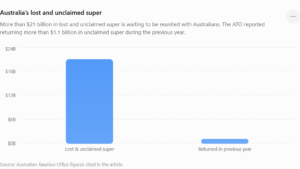
More than $21 billion in lost and unclaimed super is waiting to be reunited with Australians. For SMSF members, this is more than an administrative loose end. It may represent an overlooked opportunity to strengthen retirement savings, simplify finances and ensure you consider all your superannuation benefits when planning for retirement.
The Australian Taxation Office (ATO) says the average amount of lost super is about $41,000, although individual amounts can be much higher. If you have changed jobs, moved home, changed your name, switched phone numbers or left an old super account inactive, it may be worth completing a quick super health check. Importantly, SMSF members can still have super sitting in a former retail, industry or employer fund. In some cases, the ATO may also hold unclaimed super on their behalf.
Contents
- What is lost super?
- Why SMSF members should check for lost super
- How super becomes lost or unclaimed
- How to find lost super
- Can you transfer lost super to an SMSF?
- Consolidation, insurance and compliance considerations
- A five-minute super health check
- Frequently asked questions
- Related links
What Is Lost Super?
Lost super generally refers to superannuation money held in an account that has become disconnected from its member.
For example, a super fund may lose contact with a member after they move home or change their contact details. Similarly, an account may become inactive when it stops receiving contributions. In some circumstances, a super fund must transfer the money to the ATO. The ATO then holds the amount while attempting to match it with the correct individual. When possible, the ATO may reunite the money with an active super account. In eligible circumstances, it may also make a direct payment.
The ATO reports that it returned more than $1.1 billion in unclaimed super during the previous year through account consolidations and direct payments.
Where could forgotten super be sitting?
For an SMSF member, lost or forgotten super may remain in:
- A fund connected to a previous employer
- An old industry, retail or corporate super fund
- A fund opened early in their working life
- An account established before joining an SMSF
- Super transferred to the ATO after a fund lost contact with the member
- Multiple small accounts created through successive jobs
Therefore, establishing an SMSF does not necessarily mean you have identified every super account held in your name.
Why SMSF Members Should Check for Lost Super
Joining an SMSF does not automatically locate, review or transfer every previous super interest.
For instance, someone may establish an SMSF while retaining an old employer or industry fund. Alternatively, an employer may continue paying contributions into a default fund until the employee provides valid SMSF contribution details.
Finding an old account can matter for several reasons.
Lost super could add meaningful retirement capital
The ATO estimates that the average lost-super amount is around $41,000.
That amount is significant on its own. However, recovering super earlier can also give those retirement savings more time to participate in the member’s long-term investment strategy.
For example, imagine a 45-year-old discovers $25,000 of forgotten super. If they incorporate those funds into their retirement strategy, they may still have 20 years or more until retirement.
Of course, the eventual result will depend on investment returns, fees, tax, contributions, withdrawals and market conditions. Nevertheless, locating the money gives the member the opportunity to make an informed decision about it.
It can improve SMSF retirement planning
An SMSF strategy should take the members’ complete financial position into account.
Consequently, forgotten super may affect decisions involving:
- Retirement income
- Contribution strategies
- Starting a pension
- Estate planning
- Investment diversification
- Liquidity
- Insurance requirements
- Whether an SMSF remains appropriate
This becomes particularly important as a member approaches retirement. At that stage, even a previously overlooked balance could influence retirement-income planning.
It may reduce duplicate fees
As at 30 June 2026, approximately 4 million Australians held two or more super accounts.
Multiple accounts can mean multiple administration fees. In addition, members may pay premiums for insurance policies across several funds.Over time, those costs can reduce retirement savings.However, you should not automatically consolidate every account.
An older super account may include valuable life insurance, total and permanent disability insurance or income-protection cover. Therefore, before closing an account, check what insurance you would lose and whether you could obtain suitable replacement cover.
How Does Super Become Lost or Unclaimed?
Ordinary life changes often cause people to lose track of super.
Common reasons include:
- Changing employers and forgetting an earlier account
- Moving home without updating the super fund
- Changing a mobile number or email address
- Changing a name after marriage, divorce or another event
- Leaving an account inactive for an extended period
- Failing to provide a tax file number to a fund
- Losing track of accounts opened during casual, part-time or short-term employment
The ATO identifies inactive accounts and outdated contact details as major reasons people lose track of their super.
Therefore, keeping your information current can make it easier for both funds and the ATO to connect you with your retirement savings.
How to Find Lost Super
For most Australians, the easiest place to start is myGov linked to the ATO.
Step 1: Log in to myGov
First, sign in to your myGov account and open ATO Online services.
If you have not linked the ATO to your myGov account, follow the prompts to establish the connection.
Step 2: Review your super information
Next, open the superannuation section within ATO Online.
You can review information relating to:
- Super accounts reported under your tax file number
- Lost super held by the ATO
- Unclaimed super money
- Multiple super accounts
- Recent employer contributions
- Potential consolidation options
The ATO describes this review as a useful super health check.
In particular, tax time can provide a convenient opportunity to check whether your records show accounts you had forgotten about.
Step 3: Check the account before transferring anything
Finding an unfamiliar or forgotten account does not mean you should immediately transfer the balance.
Instead, check:
- The fund name
- Your member number
- The account balance
- Insurance attached to the account
- Investment options
- Exit conditions
- Whether the account belongs to you
- Whether transferring the balance fits your retirement strategy
Taking this extra step can prevent unintended consequences, particularly where valuable insurance is involved.
Step 4: Decide how the super should be managed
Once you understand the account, consider your options.
For example, an SMSF member may decide to:
- Leave the money in the existing fund
- Consolidate it into another APRA-regulated super fund
- Roll the balance into their SMSF
The appropriate choice will depend on your circumstances, insurance arrangements, investment strategy, costs, retirement objectives and the SMSF’s governing rules.
Can Lost Super Be Transferred to an SMSF?
In many cases, an eligible superannuation benefit can be rolled over into an SMSF.
However, trustees should treat the rollover as a formal superannuation transaction rather than a simple bank transfer.
How an SMSF rollover generally works
The process generally involves:
- Confirming that the SMSF is established, regulated and able to accept the rollover.
- Ensuring the SMSF has an active electronic service address where required.
- Checking the SMSF’s ABN and bank details.
- Requesting the rollover through the existing fund or relevant ATO-supported service.
- Confirming that the SMSF received the money.
- Recording the rollover correctly in the fund’s accounts and member records.
- Reviewing the SMSF investment strategy if the additional balance materially changes the fund’s circumstances.
Proper documentation is important throughout this process.
Do Not Route a Super Rollover Through a Personal Bank Account
A super rollover should generally move through the proper superannuation rollover process.
You should not normally arrange for the releasing fund to pay the rollover into your personal bank account and then transfer the money into the SMSF.
Doing so can create significant problems involving:
- Tax treatment
- Contribution caps
- Transaction classification
- Record keeping
- SMSF compliance
Instead, the money should move through the appropriate superannuation rollover process into the SMSF’s bank account, with the necessary documentation retained.
Consolidation, Insurance and SMSF Compliance
Recovering forgotten super can be beneficial. However, locating the money is only the first step.
SMSF trustees must continue to comply with their trustee obligations and manage the fund in members’ best interests.
Therefore, consider the wider consequences before transferring another super balance into the SMSF.
Insurance
Closing an existing super account may cancel life, TPD or income-protection insurance.
Furthermore, replacing that insurance may prove difficult or more expensive, particularly if the member’s health or circumstances have changed.For this reason, review existing cover before requesting a rollover.
Investment strategy
A larger SMSF balance may change the fund’s investment position.
For example, additional funds could affect:
- Asset allocation
- Diversification
- Liquidity
- Cash requirements
- Risk exposure
Consequently, trustees should consider whether the SMSF’s existing investment strategy remains appropriate after receiving a significant rollover.
SMSF costs
SMSFs can provide cost advantages in some circumstances. However, the overall cost depends on the fund’s balance, investments, complexity and professional services.
Therefore, trustees should assess costs in the context of the entire fund rather than assuming consolidation will automatically produce savings.
Contributions
A genuine rollover generally differs from a super contribution.
Nevertheless, trustees need to process and document the transaction correctly so the fund’s records accurately describe what occurred.
Retirement phase
Members who are approaching retirement or already receiving an SMSF pension may need to consider additional consequences.
For example, a newly discovered balance could affect retirement-income planning, pension strategies, taxation or the way benefits are managed within the fund.
Records
Good records remain essential.
Trustees should retain relevant:
- Rollover confirmations
- Member statements
- Bank records
- Fund correspondence
- Accounting records
- Supporting documentation
These records can help the SMSF accountant and auditor understand and verify the transaction.
Professional advice
In some situations, professional advice may also be appropriate.
This may be particularly relevant where the decision involves:
- Existing insurance
- Retirement timing
- Estate planning
- Investment strategy
- Tax implications
- Large super balances
Therefore, treat the discovery of forgotten super as an opportunity to review the broader retirement structure, rather than simply viewing it as extra money.
A Five-Minute Super Health Check Could Have Long-Term Value
The ATO encourages Australians to check for lost and unclaimed super.
In one case highlighted by the ATO, a couple approaching retirement discovered super accounts worth more than $1 million. Finding those accounts substantially changed their retirement planning.
Naturally, not every search will uncover a life-changing balance.
However, even a smaller forgotten account may still matter. It could improve visibility over your retirement savings and help identify unnecessary fees or duplicated accounts.
For SMSF members, an annual super health check can also become a useful governance habit.
Consider checking that:
- Your ATO records show the accounts you expect
- Employer contributions are reaching the correct fund
- Your contact details remain current
- You recognise all super accounts listed under your name
- You investigate legacy accounts rather than ignoring them
- Your existing insurance remains appropriate
As a result, a few minutes spent reviewing your super could help keep your overall retirement strategy organised.
Frequently Asked Questions
Can an SMSF member have lost super?
Yes.
Being an SMSF member does not prevent you from having an old super account, forgotten employer fund, inactive account or unclaimed super held by the ATO.This can happen when someone changes jobs, starts an SMSF after many years of employment or fails to consolidate earlier super accounts.
How do I check whether I have lost super?
Start by logging in to myGov and opening ATO Online services.
Then review the superannuation information linked to your tax file number.
The ATO may display:
- Lost super
- Unclaimed super
- Existing super accounts
- Multiple accounts
- Other super interests that may require investigation
Should I automatically transfer lost super into my SMSF?
No.
First, review the account and check whether it contains valuable insurance. In addition, consider its fees, investment options and how a rollover would fit within your broader retirement strategy.If you decide to transfer the balance, use the appropriate super rollover process rather than routing the money through a personal bank account.
Can I keep another super fund as well as an SMSF?
In many circumstances, yes.
Some SMSF members retain another super fund for reasons such as insurance or employer contributions.However, whether this arrangement suits you will depend on your individual circumstances and the costs and benefits of maintaining multiple accounts.
Why should I check my super regularly?
Regular checks can help identify:
- Forgotten accounts
- Incorrect employer contributions
- Outdated contact details
- Duplicate fees
- Unnecessary accounts
- Insurance you may have forgotten about
Therefore, reviewing your super periodically can improve both retirement planning and financial record keeping.
Related Links
- ATO: $21 billion in lost super — find yours, fund your future
- ATO: Lost and unclaimed super
- ATO: Finding and consolidating your super
- ATO: Self-managed super funds
- MySMSFProperty: SMSF services and resources
Important Information
This article provides general information only. It does not take account of your objectives, financial situation or needs and does not constitute personal financial, legal or tax advice. Consider obtaining professional advice before making decisions about consolidating super accounts, cancelling insurance or rolling benefits into an SMSF.