
As we stand on the precipice of an increasingly volatile global economy, many Australian investors, particularly those nearing retirement, are rightfully concerned about how to manage their SMSF (Self-Managed Super Fund) in the face of potential market corrections. The landscape is fraught with challenges, from geopolitical tensions to shifting economic policies and understanding how these […]
As we stand on the precipice of an increasingly volatile global economy, many Australian investors, particularly those nearing retirement, are rightfully concerned about how to manage their SMSF (Self-Managed Super Fund) in the face of potential market corrections. The landscape is fraught with challenges, from geopolitical tensions to shifting economic policies and understanding how these factors interact with your investment strategy is crucial.
The Current Economic Climate: A Global Perspective
To begin, let’s assess the broader economic environment. The world is currently grappling with several significant and interconnected challenges that directly impact SMSF investment strategies. Below is a summary of the key factors influencing the global economy:
| Factor | Impact |
| US Dollar Strength | Affects commodity prices and emerging market currencies. |
| Geopolitical Tensions | Disrupts global supply chains, impacts energy and agriculture sectors. |
| US Elections | Potential market volatility due to policy shifts. |
| Global Economic Bodies (WEF, IMF) | Influences investment opportunities and risks, particularly in ESG sectors. |
The strong US dollar, geopolitical tensions, upcoming US elections and the influence of global economic bodies such as the World Economic Forum (WEF) and International Monetary Fund (IMF) are all contributing to an environment of heightened uncertainty. These factors require SMSF trustees to be particularly vigilant and proactive in their investment strategies.
Market Corrections: Understanding the Risks and Opportunities
Market corrections—defined as a decline of 10% or more in the price of a security or market index—are a natural part of economic cycles. For SMSF investors, particularly those nearing retirement, understanding how to respond to these corrections is critical.
Sequencing Risk: A Key Concern for Pre-Retirees
Sequencing risk refers to the danger that the order and timing of withdrawals from a retirement account will damage the investor’s overall returns. This risk is particularly pronounced in the lead-up to and immediately following retirement when an investor’s portfolio is typically at its largest. A significant market downturn during this period can irreparably harm an SMSF’s long-term viability.
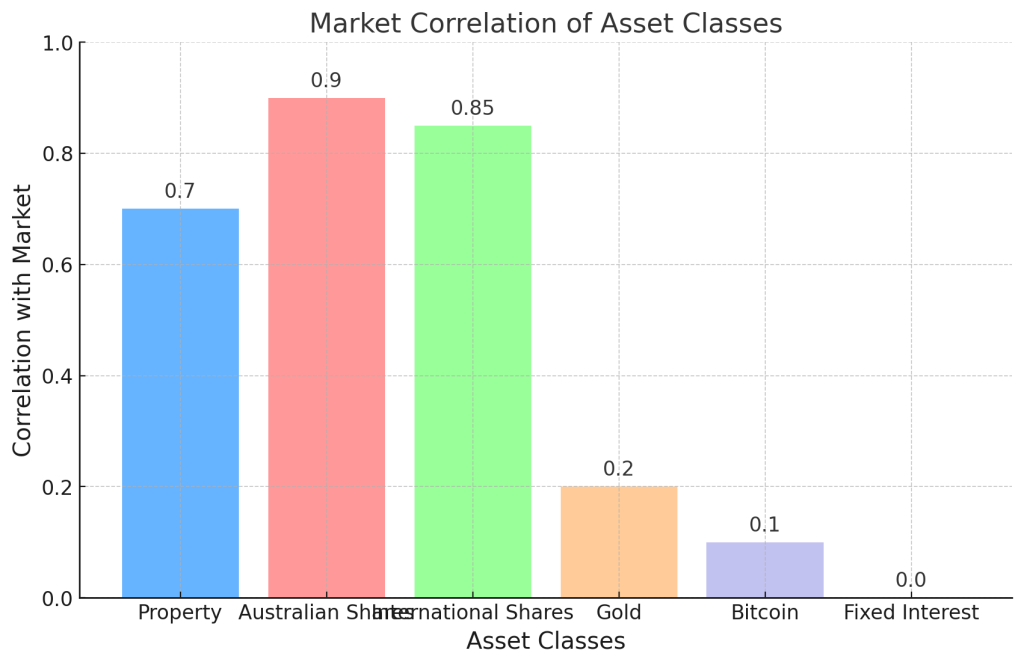
To mitigate sequencing risk, pre-retirees should consider strategies such as de-risking their portfolios by increasing their allocation to more stable, income-generating assets like fixed interest or non-market correlated investments, including gold and Bitcoin. Another strategy is to maintain a cash buffer within the SMSF, sufficient to cover several years of retirement expenses, thus avoiding the need to sell assets at depressed prices during a market downturn.
Investment Types: Diversification and Defensive Assets
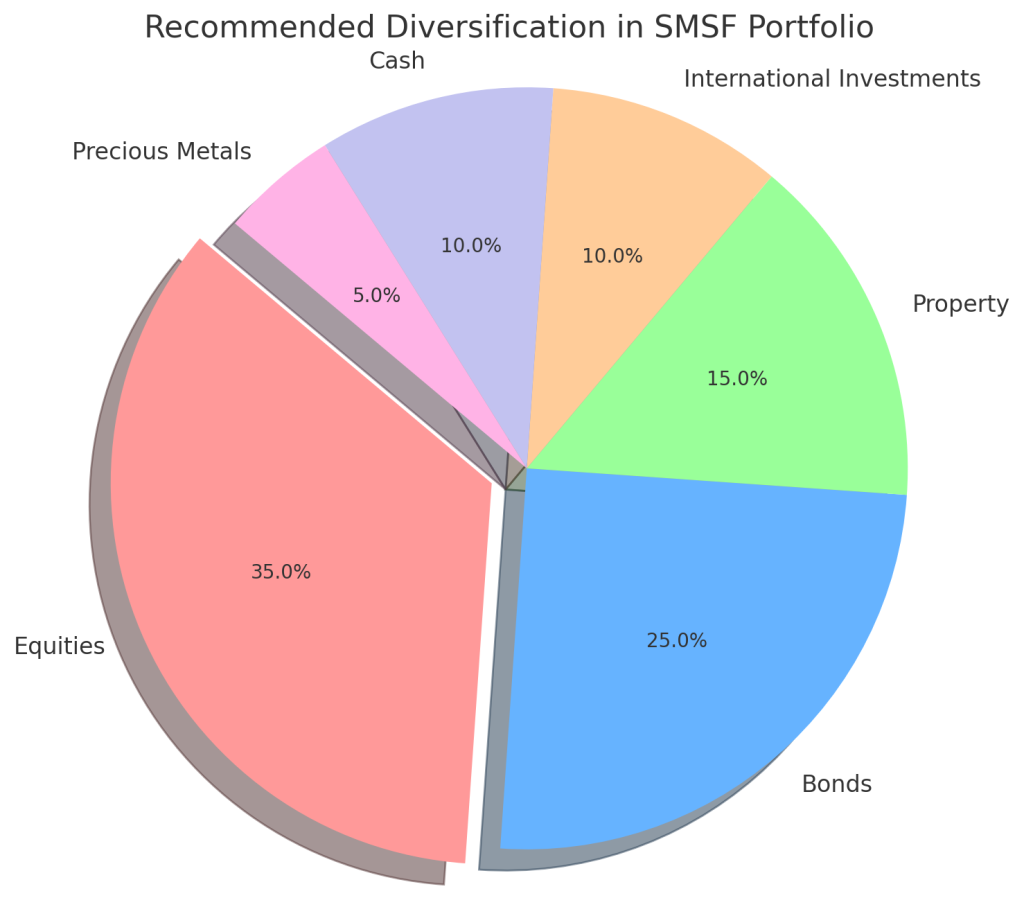
In times of market uncertainty, diversification remains one of the most effective tools in an SMSF trustee’s arsenal. Diversifying across asset classes—such as equities, fixed interest, property and international investments—can help to spread risk and reduce the impact of a market correction on the overall portfolio.
Defensive assets, which typically perform well during periods of market stress, should also play a role in an SMSF portfolio. These can include fixed interest, cash or cash equivalents and non-market correlated investments such as gold and Bitcoin. Given the current geopolitical risks and the strong US dollar, these assets can act as a hedge against inflation and currency volatility.
Market Timing Issues: The Perils of Trying to Outguess the Market
Market timing—attempting to buy low and sell high—is a strategy fraught with peril, particularly during periods of high volatility. Numerous studies have shown that even professional investors struggle to consistently time the market correctly. For SMSF trustees, the risks are even greater, as incorrect timing can significantly impact the fund’s long-term performance, especially if sequencing risk is not adequately managed.
Instead of attempting to time the market, SMSF investors are generally better served by adhering to a disciplined investment strategy. This might involve regular rebalancing to maintain the desired asset allocation or employing a dollar-cost averaging approach, where investments are made at regular intervals regardless of market conditions. Such strategies can help to mitigate the emotional response to market volatility and reduce the risk of making poor investment decisions.
Best Practices for SMSF Members: Adapting to a New Investment Landscape
Given the current global economic climate, SMSF investors should consider several best practices to safeguard their portfolios against the risks of market corrections and geopolitical uncertainty. Below is a summary of these practices:
| Practice | Description |
| Review Asset Allocation | Regularly assess and adjust asset allocation to align with risk tolerance and goals. |
| Maintain a Cash Buffer | Ensure sufficient cash reserves to cover 2-3 years of retirement expenses. |
| Consider Professional Advice | Seek advice from a financial adviser or SMSF specialist for tailored strategies. |
| Stay Informed | Keep abreast of global economic developments to make informed investment decisions. |
| Focus on Long-Term Goals | Adhere to a disciplined investment approach focused on long-term objectives. |
The Role of Global Economic Policies in Shaping SMSF Strategy
Global economic policies, particularly those from influential bodies like the WEF and IMF, are increasingly impacting investment decisions. The WEF’s focus on sustainable and inclusive growth is driving a significant shift towards ESG investing, which emphasizes environmental stewardship, social responsibility and corporate governance. For SMSF investors, this trend presents both opportunities and challenges.
On the one hand, aligning your SMSF with ESG principles can potentially yield long-term benefits, particularly as governments and corporations around the world commit to reducing carbon emissions and promoting social equity. Investments in renewable energy, green technology and sustainable infrastructure are likely to see significant growth over the coming decades.
However, the transition to a low-carbon economy also introduces short-term risks, particularly for those invested in traditional energy sectors or industries facing stringent regulatory pressures. The IMF’s economic mandates, which often include austerity measures and fiscal tightening in response to global economic shocks, can also lead to periods of market instability, particularly in emerging markets where SMSF investors may have exposure.
Conclusion: Preparing for the Future
As the global economic landscape continues to evolve, SMSF investors must remain vigilant and proactive. Market corrections are an inevitable part of investing, but by understanding the risks and opportunities they present and by implementing sound investment strategies, you can protect your SMSF and secure your financial future. In this unpredictable environment, the key to success lies in diversification, prudent risk management and a long-term perspective. By staying informed and adaptable, SMSF members can navigate the complexities of today’s global economy and achieve their retirement goals with confidence.
Warning: This content is general guidance only. It is not to be construed as financial or investment advice. SMSF members, should consult with their financial adviser before making any material changes to their SMSF investment portfolio’s. The market correlation bar chart refers to the Global Market: MSCI World Index.