
SMSFs Are Buying the Dip While the Rules Tighten Q2 2026 was a rough quarter for crypto prices. Trading volumes across global exchanges fell to some of their lowest levels since 2023. Most investors pulled back. SMSF trustees did the opposite. A recent report from Swyftx’s platform data shows something striking. SMSF accounts recorded their […]
SMSFs Are Buying the Dip While the Rules Tighten
Q2 2026 was a rough quarter for crypto prices. Trading volumes across global exchanges fell to some of their lowest levels since 2023. Most investors pulled back. SMSF trustees did the opposite.
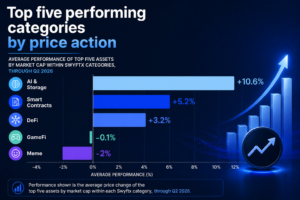
A recent report from Swyftx’s platform data shows something striking. SMSF accounts recorded their highest buy/sell ratio in the report’s history this quarter — 3.2 buys for every sell, up 90% on the previous quarter Swyftx. Bitcoin, Ethereum and XRP were the most-bought assets. SMSF investors leaned harder into accumulation during the downturn than the broader customer base did.
This appears to be a bold bet on the asset class. These purchase pattern may corelate to new crypto laws, as the ATO sharpens its audit expectations. Regulators are ramping up scam warnings at the same time, so if you are one of the trustees buying this dip, compliance deserves just as much attention as the price chart.
How Big Is the SMSF Crypto Bet, Really?
Crypto is still a small slice of the $1.06 trillion SMSF sector, but it’s growing fast. The ATO’s own data tells the story clearly.
That last line matters more than the headline number. Smaller, often younger funds are carrying proportionally more crypto risk than the sector average. These are exactly the funds with the least room to absorb a bad audit outcome or a valuation dispute.
Where the SIS Act Actually Bites
Crypto is a legal SMSF investment. The ATO has never disputed that. But the Superannuation Industry (Supervision) Act 1993 (SIS Act) doesn’t bend for digital assets. Several provisions catch trustees out repeatedly and having a deed that is clear on crypto investments is always an advantage.
The ownership question trips up more trustees than any other. The fund, not the member personally, must legally own the coins. You cannot mentally carve out a slice of your personal wallet and call it the SMSF’s. Exchange accounts and cold wallets both need to be set up in the fund’s name. Trustees act only as authorised controllers.
What Your Auditor Will Actually Demand
The ATO tightened its guidance for approved SMSF auditors on crypto assets in October 2025 (ATO). It’s worth understanding exactly what your auditor is now required to check.
Auditors must confirm your crypto investment:
-
Is permitted under the fund’s trust deed
-
Aligns with the fund’s documented investment strategy
-
Is held and owned by the fund — in a wallet or exchange account in the fund’s name, separate from personal holdings
-
Is reported at market value in the fund’s financial statements
Here’s the part that catches trustees off guard: holding statements or investment summaries alone are no longer sufficient evidence. Auditors need objective, supportable proof as at a 30 June closing price from an exchange that publishes historical data, for example. If the crypto sits with a custodian such as an exchange, the auditor should obtain a Type 2 report where available. They should also run further substantive testing.
If the auditor can’t verify the asset exists, belongs to the fund, or is reported at the right value, they must act. Where the issue is material, they must qualify both Part A and Part B of the audit report. That triggers an Auditor Contravention Report for a regulation 8.02B breach (ATO). A qualified audit report isn’t just a paperwork inconvenience. It puts your fund’s compliance status and potentially its concessional tax treatment, on the ATO’s radar.
The Scam Layer Stacking on Top
Compliance risk is only half the picture. The ATO issued an urgent warning in June 2026. It told Australians to “stop and ask why” before setting up an SMSF (Accountants Daily). It specifically flagged crypto and property as the bait used in unlicensed advice and high-pressure sales schemes. Its message was blunt: an SMSF should support your retirement goals. It shouldn’t just chase one hot investment opportunity someone is pushing you toward.
ASIC’s scam alert from May 2026 adds the sharper edge. Scammers are running fake crypto trading platforms. They impersonate well-known figures in messaging app groups, then demand “withdrawal fees” that never release a single dollar (ASIC). A survey cited in that alert found 23% of 18-28 year-olds own crypto assets. Of those, 66% trade with a short-term, speculative mindset. 41% have been directly contacted about investing. If your fund’s crypto strategy, or the adviser pushing it, smells like that pattern, take the ATO’s advice. Stop and ask why.
What This Means for Trustees
Building an Audit-Ready Crypto SMSF
Final Thoughts
SMSF trustees are clearly not backing away from crypto, the accumulation data through this downturn says the opposite. But the compliance bar has risen alongside the interest. Auditors are asking harder questions. The Asic is auditing the auditors. Scammers are actively targeting the same enthusiasm that’s driving those buy/sell ratios higher.
None of this means crypto does not belong in an SMSF. It means the paperwork now needs to be as solid as the investment thesis. We have written in more depth on the practical side of this. See our guides on wallet compliance and audit packs and the specific SIS Act sections that catch trustees out, if you want to go deeper before your next audit.
Need Expert Guidance on Your SMSF Crypto Holdings?
Our team has spent over ten years helping trustees structure crypto holdings correctly the first time. That includes exchange setup, cold wallet compliance, valuations and audit-ready records. Explore our SMSF crypto accounting and administration service. Or get in touch to review your current setup before your fund’s next audit lands.
Disclaimer:
This article gives general information only. It is not financial, tax or legal advice. SIS Act requirements, ATO audit guidance and ASIC warnings referenced above reflect publicly available material at the time of writing. Regulators may update this guidance. Seek advice specific to your circumstances before making any SMSF investment decision, including in cryptocurrency.