

A practical, compliance-first guide for Australian SMSF trustees As Self-Managed Super Funds (SMSFs) increasingly invest in Bitcoin and other digital assets, trustees must choose crypto platforms carefully. Not every crypto exchange structure suits superannuation and the wrong setup can create audit issues, compliance breaches, or unnecessary risk. Therefore, this article explains the three recognised types […]
A practical, compliance-first guide for Australian SMSF trustees
As Self-Managed Super Funds (SMSFs) increasingly invest in Bitcoin and other digital assets, trustees must choose crypto platforms carefully. Not every crypto exchange structure suits superannuation and the wrong setup can create audit issues, compliance breaches, or unnecessary risk.
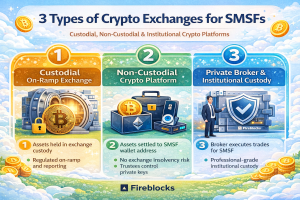
Therefore, this article explains the three recognised types of crypto exchange structures used by SMSFs, focusing on how custody works, who controls the assets and what auditors expect to see. In addition, it highlights SMSF-relevant platforms such as Independent Reserve, Elbaite and BlockByte, including institutional custody using Fireblocks.
This is general information only and is written in a neutral, educational manner.
Contents
-
Why exchange structure matters for SMSFs
-
Traditional custodial on-ramp exchanges
-
Non-custodial crypto exchange platforms
-
Private brokers and institutional execution models
-
SMSF compliance and audit considerations
-
Comparison table – exchange types for SMSFs
-
Frequently asked questions
-
Further reading and support
1. Why Exchange Structure Matters for SMSFs
Before selecting any crypto platform, SMSF trustees should understand one key principle:
How crypto is held matters just as much as what crypto is bought.
Unlike personal investing, SMSFs must:
-
Keep fund assets legally separate from personal assets
-
Demonstrate clear ownership and control
-
Maintain audit-ready records at all times
As a result, the structure of the exchange custodial, non-custodial, or broker-executed directly affects compliance outcomes.
2. Traditional Custodial On-Ramp Exchanges (SMSF Accounts)
Best suited for:
SMSFs seeking a regulated, conservative entry point into crypto with strong reporting.
How custodial on-ramp exchanges work
A traditional custodial exchange allows an SMSF to:
-
Transfer AUD directly from the SMSF bank account
-
Buy and sell major cryptocurrencies
-
Hold assets in exchange custody or withdraw to cold storage
-
Generate transaction histories and EOFY reports
Because the exchange holds the crypto while assets remain on the platform, this model prioritises convenience and reporting simplicity.
Example: Independent Reserve

Independent Reserve is widely used by Australian SMSFs because it:
-
Supports accounts in the legal name of the SMSF trustee
-
Is AUSTRAC-registered
-
Segregates client assets
-
Provides clear, audit-ready reporting
-
Allows withdrawals to SMSF-owned wallets
Consequently, this model suits:
-
First-time SMSF crypto investors
-
Buy-and-hold Bitcoin strategies
-
Trustees prioritising administrative simplicity
However, trustees should remember that the exchange retains custody while assets remain on the platform.
3. Non-Custodial Crypto Exchange Platforms (Direct-to-Wallet)
Best suited for:
SMSFs that want full control of private keys and no ongoing exchange custody risk.
What “non-custodial” means for an SMSF
In a non-custodial structure:
-
The platform executes the trade
-
Crypto settles directly to an SMSF-controlled wallet
-
The platform never holds pooled client assets
As a result, trustees maintain continuous ownership and control. This structure closely resembles how SMSFs hold physical bullion or other bearer assets.
Why non-custodial platforms appeal to SMSFs
Non-custodial platforms increasingly appeal to SMSFs because they:
-
Eliminate exchange insolvency and withdrawal-freeze risk
-
Support clear asset segregation
-
Simplify ownership verification for auditors
-
Suit long-term Bitcoin allocation strategies
Importantly, auditors often find non-custodial arrangements easier to verify, provided documentation remains strong.
Example: Elbaite

Elbaite operates as a non-custodial crypto exchange platform, meaning:
-
Crypto settles directly to SMSF-controlled wallets
-
Assets never sit in pooled exchange accounts
-
Each trade includes execution records and confirmations
From an SMSF perspective, this structure:
-
Maintains trustee control at all times
-
Reduces counterparty risk
-
Aligns with audit expectations around ownership evidence
However, trustees must take responsibility for wallet governance, including:
-
Documenting wallet ownership
-
Retaining transaction records
-
Sourcing independent valuations at 30 June
4. Private Brokers & Institutional Execution Model – BlockByte

Best suited for:
SMSFs with larger allocations, higher sophistication, or a preference for institutional-grade custody.
How the private broker model works
Under a broker-executed model:
-
A broker executes trades on behalf of the SMSF
-
Assets settle into institutional custody or SMSF-controlled wallets
-
Trustees avoid retail trading interfaces
This structure mirrors how professional funds access crypto markets.
Example: BlockByte using Fireblocks
BlockByte operates as a private crypto brokerage and execution service. Importantly, it leverages Fireblocks, a custody platform widely used by banks, funds and custodians.
Fireblocks provides:
-
Multi-party computation (MPC) key security
-
Policy-based transaction approvals
-
Institutional governance and audit controls
Therefore, this model suits SMSFs that:
-
Want professional execution
-
Prefer institutional custody over retail exchanges
-
Seek reduced operational risk
5. SMSF Compliance and Audit Considerations
Regardless of platform type, SMSF trustees must ensure:
-
The trust deed permits crypto investments
-
The investment strategy explicitly includes digital assets
-
Assets are held in the name of the SMSF
-
Trustees control custody arrangements
-
Personal and fund assets remain segregated
-
Full transaction records are retained
-
Independent market valuations exist at 30 June
Auditors commonly request:
-
Trade confirmations or broker invoices
-
Wallet or custody ownership evidence
-
Year-end balances
-
Price verification sources
6. Comparison Table – Exchange Types for SMSFs
| Exchange Structure | Best For | Key Benefits | Key Considerations |
|---|---|---|---|
| Custodial on-ramp exchange | Conservative SMSFs | Regulation, simplicity, reporting | Exchange custody exposure |
| Non-custodial platform (Elbaite) | Control-focused SMSFs | Full ownership, no custody risk | Wallet governance responsibility |
| Private broker (BlockByte + Fireblocks) | Larger or sophisticated SMSFs | Institutional custody, governance | Higher minimums, broker reliance |
7. Frequently Asked Questions
Can an SMSF self-custody crypto?
Yes. SMSFs may self-custody crypto provided trustees clearly document ownership, control private keys and maintain audit-ready records.
Is institutional custody allowed for SMSFs?
Yes. SMSFs may use third-party custodians, provided assets are held for the sole benefit of the fund and ownership remains clear.
Can an SMSF use multiple platforms?
Yes. Many SMSFs combine:
-
On-ramps for purchasing
-
Non-custodial wallets for long-term storage
-
Brokers for large allocations
8. Further Reading & Support
If you would like help with:
-
Selecting SMSF-appropriate crypto platforms
-
Structuring custody correctly
-
Preparing your fund for audit
You can contact us here:
👉 https://mysmsfproperty.com.au/contact-us-for-setups-and-support/
Disclaimer: This article is general information only and does not constitute financial, legal, or tax advice. SMSF trustees should seek professional advice specific to their circumstances.