
What Property Can I Buy in an SMSF? Smart investing with your super – what’s in, what’s out and what to watch. 📌 Introduction Australians love affair with property has increasingly extended, into self-managed super funds (SMSFs) in the last two decades. With more control and flexibility, SMSF trustees often ask: “What kind of property […]
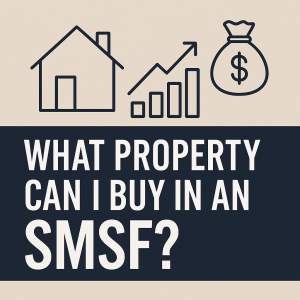
What Property Can I Buy in an SMSF?
Smart investing with your super – what’s in, what’s out and what to watch.
📌 Introduction
Australians love affair with property has increasingly extended, into self-managed super funds (SMSFs) in the last two decades. With more control and flexibility, SMSF trustees often ask: “What kind of property can I actually buy within my fund?” The answer depends on your investment purpose, ownership structure and compliance with superannuation law, including the Sole Purpose Test and arms-length investment rules under the SIS Act. This arcticle, will highlight what is allowed, what is not and the grey areas you must approach with caution.
✅ What You Can and Can’t Do With Property in Your SMSF
| Property/Scenario | Allowed in SMSF? | Compliance Notes |
|---|---|---|
| Sell your own home or existing investment to SMSF | ❌ Not Allowed | Breaches related party rules under SIS Act sections 62, 66, 109 |
| Rent SMSF property to yourself or family | ❌ Not Allowed | Must be arms-length, commercial tenants only |
| Renovate using SMSF cash (no loan) | ✅ Yes, with conditions | Allowed if it doesn’t result in a new or replacement asset (ATO SMSFR 2011/D1) |
| Subdivide or change title | ❌ Not Allowed | Creates a replacement asset, which is not allowed |
| Buy off-the-plan property | ✅ Allowed (structure carefully) | Must be single acquirable asset with deposit, construction and loan aligned |
| House & land package (single contract) | ✅ Allowed (2-part settlement) | Must be structured correctly from the outset |
| Build on SMSF-owned land | ❌ Not Allowed | Changes asset character, violating borrowing rules |
| Add a granny flat | ✅ Yes (ATO SMSFR 2012/1) | Permitted if not a separate, saleable title |
| Buy commercial/business property | ✅ Yes | Market value, lease in place, regular valuation, stamp duty applies |
| Run a business from inside SMSF | ❌ Generally Not Allowed | Complex structure required to meet compliance; high risk |
| Invest in a holiday home | ✅ Limited, strict conditions | Must be commercially leased, externally managed, no personal use without rent |
🔍 Let’s Break It Down
1. Buying Property from Yourself or a Related Party
No — you cannot transfer your own home or personal investment property into your SMSF. This is a breach of several SIS Act sections, especially section 66, which prohibits related-party acquisitions unless they meet very narrow exceptions (like business real property).
🚫 You also can’t live in it, rent it to family or mates, or offer it at a discount.
2. Renovating Property in an SMSF
You can renovate using cash already in the fund, or via additional contributions (within cap limits). But you cannot borrow to pay for improvements under an existing limited recourse borrowing arrangement (LRBA) and:
-
You must not turn the property into a “different” asset.
-
Example of what’s not allowed: Converting a house into two units or subdividing.
3. Off-the-Plan Property
Yes, this is allowed, but must be structured properly:
-
SMSF typically pays a deposit, with the rest paid at settlement via a loan.
-
Lender applications are usually submitted 90 days before completion.
-
Furniture packages cannot be included in the lending amount.
4. House & Land Packages
These are allowed if:
-
Acquired as a single contract.
-
Funded via two payments (deposit + construction via drawdowns).
-
Building on existing SMSF land is not allowed if it alters the original asset.
5. Granny Flats
Adding a granny flat is allowed if:
-
It doesn’t result in a separate title.
-
It cannot be sold independently from the main dwelling.
6. Commercial Property
You can buy a commercial (business) property through your SMSF — and you’re even allowed to lease it to your own business. But:
-
The sale must be at market value.
-
You must have a formal lease.
-
Rent must be commercially assessed.
-
Property needs independent valuation every 3 years (or sooner under some loan terms).
7. Running a Business Inside an SMSF
Usually not allowed. You’ll likely breach:
-
The Sole Purpose Test
-
Non-arms-length income rules
-
In-house asset restrictions
However, in rare structures (e.g. through a related unit trust), limited forms of business exposure may be possible — only under expert advice.
🔗 ATO guidance on carrying on a business in an SMSF
8. Holiday Homes
This is where many trustees go wrong. Yes, you can own a short-term rental through your SMSF, but:
-
No personal use without full commercial rent.
-
Property must be externally managed.
-
If it becomes a “personal asset,” it may be reclassified as an in-house asset, breaching the 5% limit and triggering a 45% tax rate on fund earnings.
⚠️ Final Word
Property in an SMSF is powerful — but highly regulated. Before buying, building, or renovating anything, always ask:
-
❓ Does this benefit me now, or only in retirement?
-
❓ Is the deal 100% commercial and at arm’s length?
-
❓ Could it breach related party or in-house asset limits?
📣 Warning: This article is general in nature. Speak to a licensed SMSF advisor or tax expert before making any property-related decisions in your fund.
Resources and Links:
ATO Link:ATO SMSF Property
Warning: This information is general in nature and you will need to seek specialist financial and legal advice for your circumstances.